State of Stress: Which States Are Struggling Most With Financial Anxiety and What to Do About It

I need to offer a snapshot of our economy's overall health, because it’s creating financial stress for many families. Here’s what we know at this moment.
I woke up this morning with a news alert from the Washington Post: Diesel price hits $6 record high amid war with Iran. Most of us don’t use diesel in our cars. But do you know who does? The trucks that transport our groceries. So expect grocery prices to keep rising faster than inflation.
My doom scroll continued to an Associated Press report: Mortgage Rates Climb: Average rate on a 30-year home loan hits the highest level in almost 14 months. As reported by the Associated Press:
“Mortgage rates are influenced by several factors, including inflation, broader policy rate decisions from the Federal Reserve, and expectations from bond market investors for the economy. They generally follow the trajectory of the 10-year Treasury yield, which lenders use as a guide to pricing home loans.”
Both mortgage rates and bond yields have been mostly rising this year due to the U.S. war with Iran, which has pushed oil prices sharply higher. That’s led to heightened worries about inflation, which drives up bond yields.”
It’s likely to get worse. Here’s why.
The next news alert I needed to clear from my phone was from the NY Times: Elevated Inflation Keeps Pressure on Fed to Raise Interest Rates. That increases the chances of mortgage rates rising even more in the future, as well as rates on other consumer loans.
I have a couple of recent posts that will help you make informed home-buying decisions, or help with your current mortgage:
Related: Help With Mortgage: 36 Ways to Lower Payments, Get Assistance, and Make Smarter Mortgage Decisions
In the meantime, check out the Financial Health Barometer.
What Is the Financial Health Barometer and Why It Matters
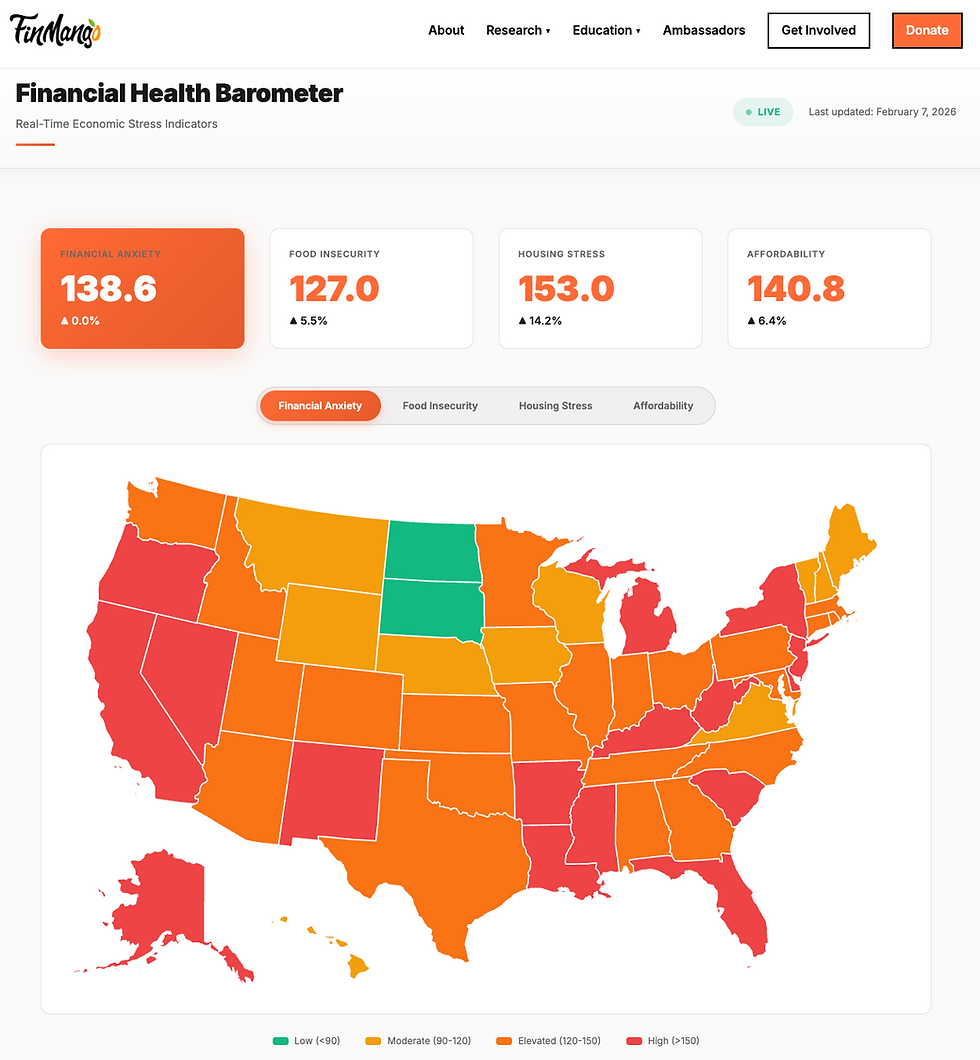
The FinMango Financial Health Barometer is a real-time economic stress tracker that shows how Americans are experiencing financial insecurity across the country. Unlike traditional government reports that lag by months, the Barometer updates daily and combines real behavior signals with official datasets to reveal stress trends as they happen.
It measures four key indicators.
Financial anxiety based on searches related to debt relief and bankruptcy
Food insecurity based on demand for food assistance resources
Housing stress tied to rent burden, eviction risk, and affordability
Affordability reflecting overall cost of living pressure
Each metric is scored on an index from low stress to crisis level, allowing meaningful comparisons across states.
Which States Are Struggling Most With Financial Anxiety
The Barometer shows wide variation in financial stress across the United States. Some states consistently show elevated or crisis-level financial anxiety. That means residents in those states more often search for debt help, bankruptcy information, or emergency financial resources.
These patterns often reflect a mix of pressures, including rising housing costs, growing credit card and auto loan balances, and wages that have not kept pace with inflation.
Trillions in consumer debt and millions of households unable to cover a modest emergency create a fragile baseline.
Scroll through the interactive Barometer dashboard at finmango.org/barometer to check your own state’s financial anxiety and stress trends in real time.
What to do About It
I have been married since 2002. My wife and I have three children together. I know what it means to operate under the most stressful conditions.
I am the only Certified Financial Therapist™, Accredited Financial Counselor™, and Fair Play Facilitator™ who empowers couples with systems to manage money and the home as a team, drawn from decades of national leadership and lived experience.
Contact me to set up a free 15-minute exploratory call if your stress is too much to bear.
Original Post: 2/11/26
Updated Post: 9/11/26


