From Scorekeeping to Systems: The Power of Feeling Heard

A Guide to Validation, Empathy, and Managing the Home as a Team

Emotional invalidation doesn’t usually show up as a screaming match. It slips in quietly. A dismissive comment. A sarcastic eye roll. A quick “you’re being dramatic” in the middle of a stressful week. Over time, those small moments accumulate, and what once felt like partnership starts to feel like loneliness.
In my work with dual-career couples, I’ve seen how quickly financial tension, uneven domestic labor, and unspoken resentment take root when one or both partners stop feeling heard.
The Real Cost of Emotional Invalidation
Emotional invalidation—statements like “You’re overreacting” or “It’s not that big of a deal”—erodes trust over time. According to Psychology Today, emotional invalidation leads to:
Emotional withdrawal
Increased conflict and anxiety
Decreased intimacy and trust
In short: dismissing feelings quietly destroys emotional safety. And in a relationship, that safety is everything.
Why Validation is the Game-Changer
Validation doesn’t mean agreement. It means acknowledging your partner’s reality without judgment. It tells them, “I see you. What you feel matters to me.”
Whether your partner feels overwhelmed by work stress or hurt by feeling unappreciated at home, validating that pain opens the door to connection. Without it, any attempt at teamwork, whether financial or domestic, becomes a struggle for power instead of a practice in partnership.
The Gender Trap: Stop Competing, Start Connecting
Too often, couples find themselves locked in what feels like a zero-sum battle: “Try being a woman.” “Not all men.” “You think you have it bad?”
Let’s be clear: inequality is real, and women face a disproportionate share of injustice in the workplace and beyond. But invalidating men’s emotional pain—especially in the home—isn’t justice. It’s fuel for more division.
Many men today carry the heavy weight of outdated expectations: to be stoic, to provide, to never complain. When they fall short of these roles—or feel unappreciated for what they do contribute—they often feel shame.
Now, imagine being told that your shame doesn’t matter because you have “privilege.” That’s not a foundation for empathy. That’s a recipe for emotional distance.
Dr. Joshua Coleman’s Take: Love as Motivation
On the Modern Husbands podcast, we hosted Dr. Joshua Coleman, author of The Lazy Husband: How to Get Men to Do More Parenting and Housework. His perspective is clear: men are more likely to share the load when they feel their efforts are appreciated—when they’re doing it for their partner, not just because a chore chart says they should.
Whether or not that’s “fair” is up for debate. But what’s not is this: when either partner feels dismissed, micromanaged, or unappreciated, they disengage. When they feel respected, they lean in.
Validation in Action: Tips for Real Connection
✅ Listen without defense
Let your partner speak without interrupting or correcting.
💬 “I hear you. That must be hard.”
✅ Acknowledge emotions before offering solutions
💬 “It makes sense that you’d feel that way.”
🚫 Avoid comparisons or scorekeeping
💬 “Other people have it worse” shuts down dialogue.
💬 “I’m sorry I dismissed that earlier” opens it.
✅ Use “I” statements
💬 “I felt hurt when…” avoids blame and invites empathy.
✅ Reassure your commitment
💬 “I may not fully understand, but I want to.”
Create Systems, Not Scorecards
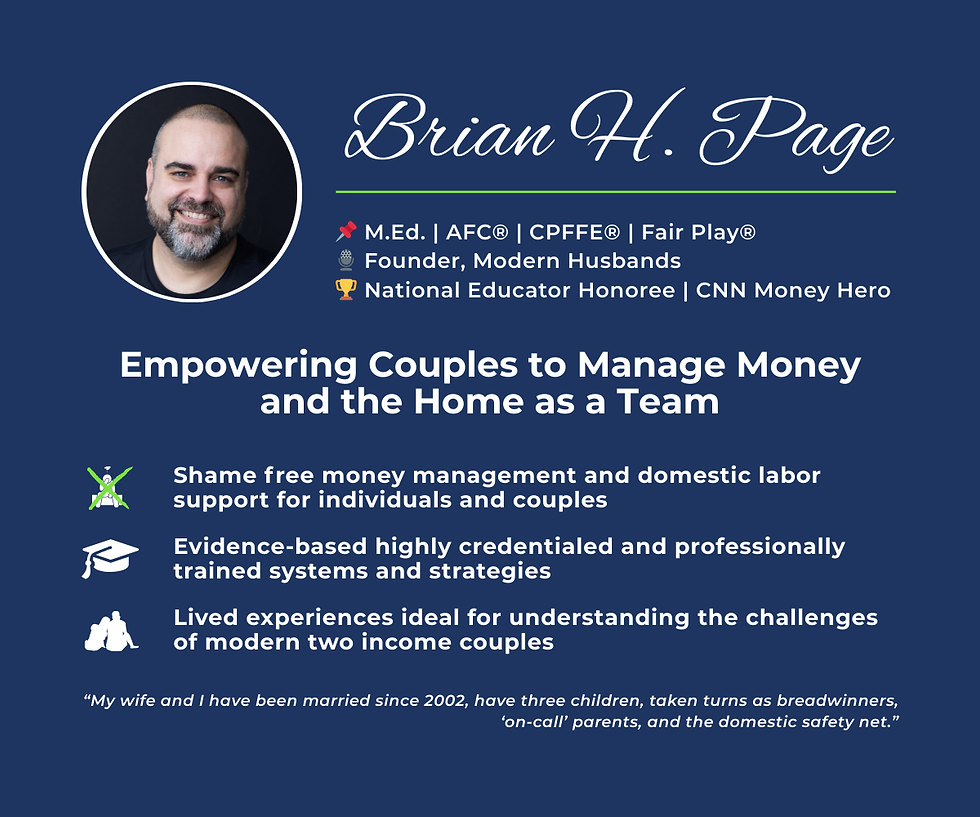
I began my journey building Modern Husbands after reading Equal Partners by Dr. Kate Mangino and implementing the Fair Play system by Eve Rodsky in my own marriage.
These frameworks transformed how we handled money and home life—not by telling each other what to do, but by assigning clear roles, setting expectations, and building mutual respect.
I’m proud to be a Fair Play Policy Institute Facilitator, helping couples turn their home into a well-run small business—where both partners feel seen, valued, and empowered.
Related: How the Fair Play System Works
Let’s Ditch Shame—And Build a System That Works
Shaming your husband won’t fix anything. And I’m not the person who will shame you either. I’ve lived through the frustration, the miscommunication, and the imbalance. But I’ve also seen firsthand what happens when couples start communicating with compassion—and when systems replace assumptions.
Your home should run like a business—efficient, respectful, and full of appreciation. When both partners understand their responsibilities and feel emotionally validated, the teamwork becomes effortless. That’s when couples start thriving.
Ready to Build a Team with Your Partner?
If you're tired of the conflict and ready to turn your relationship into a partnership built on empathy and shared purpose—let’s talk.
👉 Reach out today to start building systems to manage your money and home as a team.Because you deserve more than just surviving marriage. You deserve to thrive in it—together.
Click here to learn more about me and how I can help.